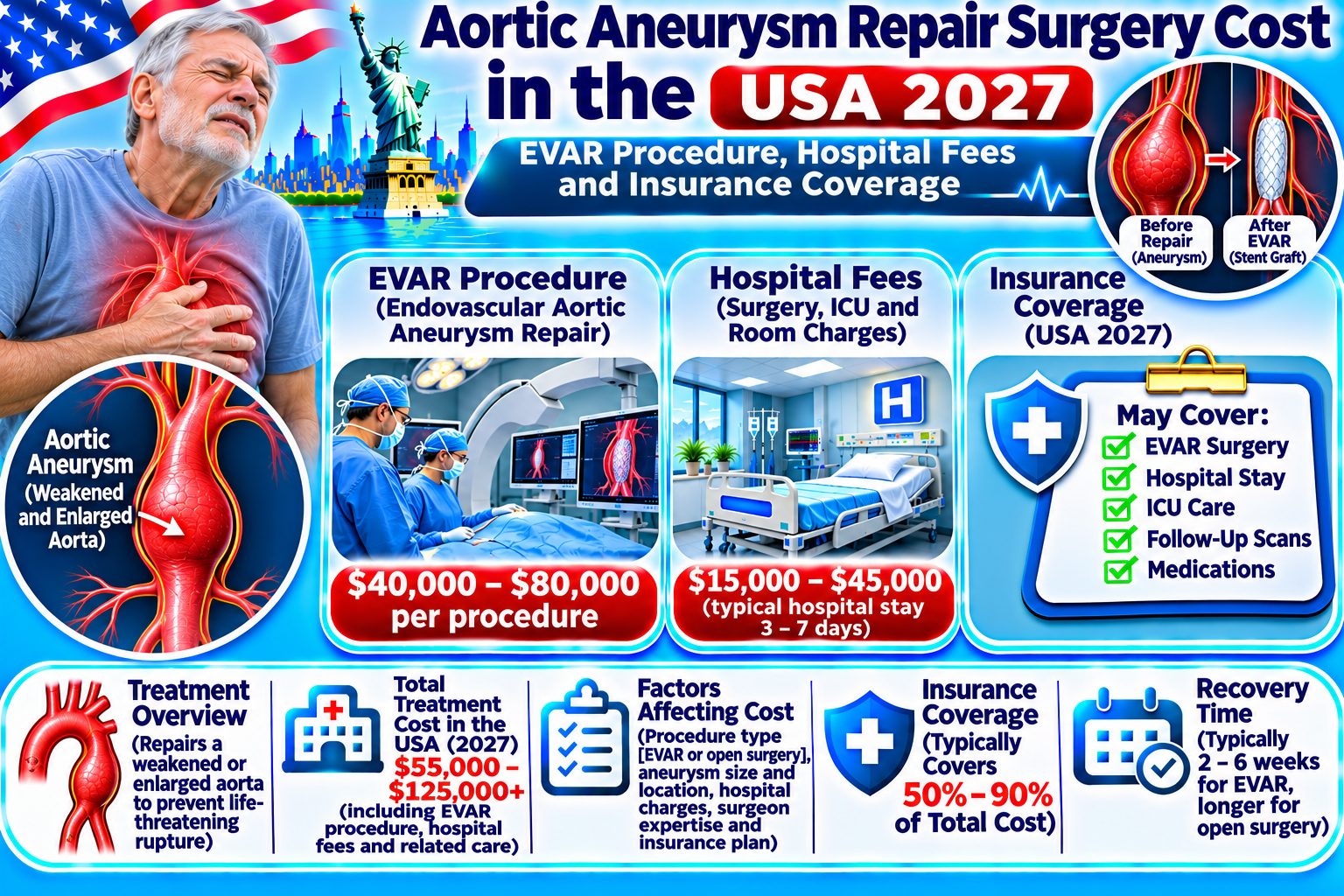
Aortic aneurysm repair surgery is an important vascular procedure used to treat dangerous enlargement of the aorta, the body’s largest artery. An aneurysm develops when part of the aortic wall becomes weakened and expands. If an aneurysm ruptures, it can cause life-threatening internal bleeding.
Understanding aortic aneurysm repair surgery costs in the USA in 2027 is essential for patients comparing endovascular aneurysm repair (EVAR), traditional open surgery, vascular surgeon fees, hospital bills, and health insurance coverage. Treatment expenses depend on aneurysm location, size, surgical complexity, medical facility, and insurance benefits.
Many abdominal aortic aneurysms can be monitored until repair becomes appropriate. When intervention is necessary, EVAR may offer a less invasive alternative to conventional surgery for patients with suitable anatomy.
This guide explains estimated American aortic aneurysm treatment costs for 2027, including diagnostic imaging, stent grafts, surgery, hospitalization, Medicare coverage, recovery, and long-term follow-up.
What Is an Aortic Aneurysm?
An aortic aneurysm is an abnormal enlargement of a section of the aorta. It can occur in the abdomen or chest, and its treatment depends on location and underlying cause.
Abdominal aortic aneurysm (AAA) affects the portion of the aorta passing through the abdomen. Thoracic aortic aneurysm affects the section inside the chest.
This article focuses primarily on abdominal aortic aneurysm repair because EVAR is commonly used for this condition. Thoracic endovascular aortic repair, or TEVAR, is a different procedure with separate clinical and financial considerations.
Common Causes and Risk Factors
Aortic aneurysms can develop through progressive weakening of the arterial wall. Important risk factors include:
- Older age.
- Current or previous tobacco smoking.
- High blood pressure.
- Family history of aortic aneurysm.
- Atherosclerotic vascular disease.
- Certain inherited connective tissue disorders.
- Previous aortic injury or inflammation.
Risk factors vary between abdominal and thoracic aneurysms. Smoking cessation, blood pressure management, and appropriate medical monitoring can support overall vascular health.
Symptoms of an Aortic Aneurysm
Many abdominal aortic aneurysms cause no noticeable symptoms and are discovered during imaging for another medical condition.
When symptoms occur, they may include:
- Persistent abdominal discomfort.
- Deep pain in the back or side.
- A pulsating sensation in the abdomen.
- Unexplained abdominal or lower back pain.
Sudden severe abdominal or back pain, fainting, profound weakness, or signs of shock may indicate rupture and require immediate emergency medical attention.
How Is an Aortic Aneurysm Diagnosed?
Doctors use imaging tests to identify aneurysm size, location, and structural characteristics.
Common examinations include:
- Abdominal ultrasound for screening and monitoring.
- CT angiography for detailed surgical planning.
- MR angiography in selected circumstances.
- Blood tests to assess kidney function and general health.
- Cardiac evaluation before major vascular surgery.
CT angiography is especially important when planning EVAR because the surgeon must measure blood vessel dimensions and determine whether a suitable stent graft can be placed.
When Is Aortic Aneurysm Repair Necessary?
Not every aortic aneurysm requires immediate surgery. Doctors consider aneurysm diameter, growth rate, symptoms, anatomy, and overall surgical risk.
For many patients with an abdominal aortic aneurysm, elective repair is considered at approximately 5.5 centimeters in men or 5.0 centimeters in women, although individual circumstances can change recommendations.
Rapid enlargement, symptoms, or other high-risk features may justify earlier treatment.
Smaller, stable aneurysms are often monitored through scheduled imaging and risk-factor management.
Types of Aortic Aneurysm Repair Surgery
Endovascular Aneurysm Repair (EVAR)
EVAR is a minimally invasive procedure performed through blood vessels, usually accessed near the groin.
The surgeon guides a fabric-covered metal stent graft into the aorta and positions it inside the aneurysm. The graft creates a new pathway for blood flow, reducing pressure on the weakened aneurysm wall.
EVAR generally involves smaller incisions and shorter initial recovery than open abdominal surgery. However, it requires suitable vascular anatomy and lifelong imaging surveillance.
Traditional Open Aortic Aneurysm Repair
Open repair involves an abdominal incision to access the diseased aorta. The surgeon replaces the weakened section with a synthetic vascular graft.
Open surgery is more invasive and usually requires a longer recovery period, but it can offer durable repair for selected patients.
Complex Endovascular Repair
Some aneurysms extend close to arteries supplying the kidneys or other organs. These cases may require fenestrated or branched stent grafts.
Complex EVAR generally requires additional planning, specialized devices, and experienced surgical teams.
Aortic Aneurysm Repair Surgery Cost in the USA in 2027
American aneurysm repair expenses depend on surgical technique, stent graft technology, hospital resources, specialist fees, and postoperative care.
Published research comparing abdominal aortic aneurysm procedures has reported average index hospital costs around $32,000 for standard EVAR and $36,000 for open repair in historical datasets. Actual hospital charges can be substantially higher.
The following 2027 figures are illustrative financial planning ranges rather than verified future prices or national averages.
Estimated USA Cost Breakdown
| Treatment or Service | Estimated Cost (USD) |
|---|---|
| Vascular Surgeon Consultation | $200–$600+ |
| Abdominal Aortic Ultrasound | $200–$800+ |
| CT Angiography | $800–$4,000+ |
| Standard EVAR Procedure | $40,000–$100,000+ |
| Traditional Open AAA Repair | $50,000–$120,000+ |
| Complex Fenestrated or Branched EVAR | $80,000–$180,000+ |
| Stent Graft Device | $8,000–$30,000+ as a cost component |
| Surgeon Professional Fees | $4,000–$15,000+ if separately billed |
| Anesthesia Professional Fees | $1,500–$6,000+ if separate |
| Follow-Up Imaging | $200–$3,000+ per examination |
Important: These broad hypothetical ranges are intended for preliminary budgeting. EVAR and open repair estimates may already include device, surgeon, anesthesia, and hospital charges. Do not add overlapping components to a complete quotation.
USA Aortic Aneurysm Surgery Cost Comparison
Because this article focuses on the United States, the following table compares American treatment scenarios rather than unrelated countries.
| USA Treatment Scenario | Illustrative Total Budget |
|---|---|
| Elective Standard EVAR | $40,000–$100,000+ |
| Elective Open AAA Repair | $50,000–$120,000+ |
| Complex Endovascular Repair | $80,000–$180,000+ |
| Emergency Ruptured Aneurysm Repair | $100,000–$250,000+ |
Emergency treatment may be considerably more expensive because of intensive care, blood transfusions, complications, and prolonged hospitalization.
EVAR Procedure Cost and Hospital Fees
EVAR requires specialized imaging, vascular access equipment, stent graft devices, and a trained surgical team.
The total bill may include operating room services, implant costs, anesthesia, postoperative monitoring, medications, and hospital accommodation.
Research has shown substantial variation in EVAR device prices between hospitals. Although EVAR often requires a shorter initial hospital stay, expensive grafts and follow-up imaging contribute to overall costs.
Open Aortic Aneurysm Repair Cost
Open surgery typically requires general anesthesia, extensive surgical resources, and postoperative hospital monitoring.
Patients may spend additional time in intensive care or inpatient recovery compared with uncomplicated EVAR.
Hospital expenses depend on surgical complexity, length of stay, blood products, and postoperative complications.
EVAR vs Open Surgery: Which Is More Expensive?
EVAR may have lower initial hospital costs in selected cases because recovery is often faster. However, the stent graft and specialized equipment can be expensive.
Open surgery may involve longer hospitalization but can require less intensive long-term imaging surveillance.
Studies suggest that the initial financial advantages of EVAR can narrow over time because of surveillance imaging and possible repeat procedures.
Medical suitability, aneurysm anatomy, and long-term outcomes should guide the treatment decision rather than cost alone.
Aortic Aneurysm Repair With Health Insurance
Many comprehensive American health insurance plans cover medically necessary aortic aneurysm repair when applicable clinical requirements are satisfied.
Coverage may include EVAR, open surgery, diagnostic imaging, inpatient care, and follow-up treatment.
Important insurance considerations include:
- Annual deductible and out-of-pocket maximum.
- Hospital and vascular surgeon network participation.
- Prior authorization for planned procedures.
- Coverage for specialized stent grafts.
- Intensive care and inpatient hospital benefits.
- Diagnostic imaging and laboratory coverage.
- Follow-up CT scans or ultrasound examinations.
- Coverage for complications and repeat procedures.
Patients should request personalized benefits information before elective surgery whenever possible.
Medicare Coverage for Aortic Aneurysm Repair
Original Medicare generally covers medically necessary aneurysm repair when applicable requirements are met.
Medicare Part A commonly applies to qualifying inpatient hospital admissions. Part B generally covers eligible physician services, diagnostic examinations, and certain outpatient care.
For reference, published 2026 national unadjusted Medicare inpatient payment examples for EVAR-related hospital classifications were approximately $30,731 to $50,049, depending on the classification.
These are hospital reimbursement figures, not patient bills or guaranteed 2027 payments.
Medicare Advantage plans may have different provider networks, authorization requirements, and cost-sharing arrangements.
Medicaid and Financial Assistance
Medicaid may cover medically necessary aneurysm repair for eligible individuals, subject to state-specific benefits and authorization rules.
Some nonprofit hospitals offer financial assistance programs based on income and eligibility.
Hospital financial counselors can explain available payment arrangements and assistance options.
Aortic Aneurysm Surgery Without Insurance
Uninsured patients may face substantial expenses for vascular surgery, diagnostic imaging, hospitalization, and follow-up care.
Before accepting an elective surgical estimate, patients should ask:
- Are vascular surgeon fees included?
- Does the quotation include the stent graft?
- Are anesthesia and intensive care covered?
- How many hospital days are included?
- Will follow-up imaging be billed separately?
- What happens if complications require additional care?
Factors Influencing Aortic Aneurysm Surgery Prices
1. Aneurysm Size and Location
Large or anatomically complex aneurysms may require more specialized procedures and additional surgical planning.
2. Surgical Technique
EVAR, complex endovascular repair, and traditional open surgery involve different equipment, staffing, and hospital resources.
3. Stent Graft Technology
Advanced graft systems can substantially increase device expenses, particularly in complex vascular anatomy.
4. Hospital and Intensive Care Charges
Operating room services, nursing care, intensive monitoring, and length of hospitalization influence total expenses.
5. Insurance Coverage
Deductibles, coinsurance, negotiated payment rates, and network restrictions affect patient financial responsibility.
6. Geographic Location
Healthcare prices differ across American cities and states because of regional operating costs and insurance arrangements.
7. Medications and Complications
Prescription medications, unexpected bleeding, kidney problems, and additional procedures can increase treatment expenses.
Recovery After EVAR Surgery
Recovery after uncomplicated EVAR is generally faster than recovery after traditional open abdominal surgery.
Patients may return home after a relatively short hospital stay, although recovery varies according to age, medical conditions, and procedural complexity.
Patients should follow instructions regarding incision care, activity, medications, and scheduled imaging.
Recovery After Open Aneurysm Repair
Open repair generally requires a longer hospital stay and recovery period because of the abdominal incision and major vascular reconstruction.
Patients may experience temporary fatigue, discomfort, and reduced physical endurance.
Return to normal activities should follow the vascular surgeon’s recommendations.
Long-Term Follow-Up and Imaging Costs
EVAR requires ongoing surveillance to identify endoleaks, graft movement, aneurysm enlargement, or device-related problems.
Follow-up may involve CT angiography, duplex ultrasound, or other imaging selected by the treating specialist.
Long-term imaging can create additional healthcare expenses that should be considered when comparing EVAR with open repair.
Possible Complications and Additional Costs
Potential complications include bleeding, infection, kidney injury, blood vessel damage, endoleak after EVAR, and cardiovascular problems.
Some patients require additional imaging, hospitalization, or repeat intervention.
Unexpected complications can significantly increase medical expenses and extend recovery time.
How to Reduce Aortic Aneurysm Repair Costs
- Verify insurance benefits before elective surgery.
- Request complete written hospital estimates.
- Confirm surgeon and facility network participation.
- Ask whether stent graft costs are included.
- Review follow-up imaging benefits.
- Explore hospital financial assistance programs.
- Discuss appropriate treatment options with a vascular specialist.
The lowest advertised price is not necessarily the best option. Patient safety, surgeon experience, and long-term treatment durability remain essential.
Frequently Asked Questions
How much does EVAR cost in the USA in 2027?
An illustrative hospital-billing budget is approximately $40,000 to $100,000 or more for standard EVAR, depending on the facility and treatment complexity.
Is EVAR cheaper than open aneurysm repair?
EVAR may involve lower initial costs in selected cases, but long-term imaging and repeat interventions can reduce the financial difference.
Does health insurance cover aneurysm repair?
Many plans cover medically necessary repair, subject to clinical criteria, authorization requirements, and patient cost-sharing.
Does Medicare cover EVAR?
Medicare generally covers qualifying medically necessary aneurysm repair under applicable inpatient or outpatient benefits.
How long does EVAR recovery take?
Recovery varies, but many patients return to routine activities sooner than after traditional open abdominal surgery.
Can an aneurysm return after EVAR?
The repaired aneurysm may develop complications such as an endoleak or enlargement, which is why ongoing imaging surveillance is important.
Conclusion
Aortic aneurysm repair surgery costs in the USA in 2027 depend on EVAR technology, open surgical techniques, vascular surgeon fees, hospital expenses, medications, and insurance coverage.
Patients should compare complete treatment estimates, verify insurance benefits, and consult experienced vascular specialists before making medical and financial decisions.
Medical Disclaimer: This article provides general educational and financial planning information only. It does not replace professional medical advice, diagnosis, or treatment. All 2027 prices are illustrative estimates and should be verified directly with healthcare providers, hospitals, and insurance companies.
