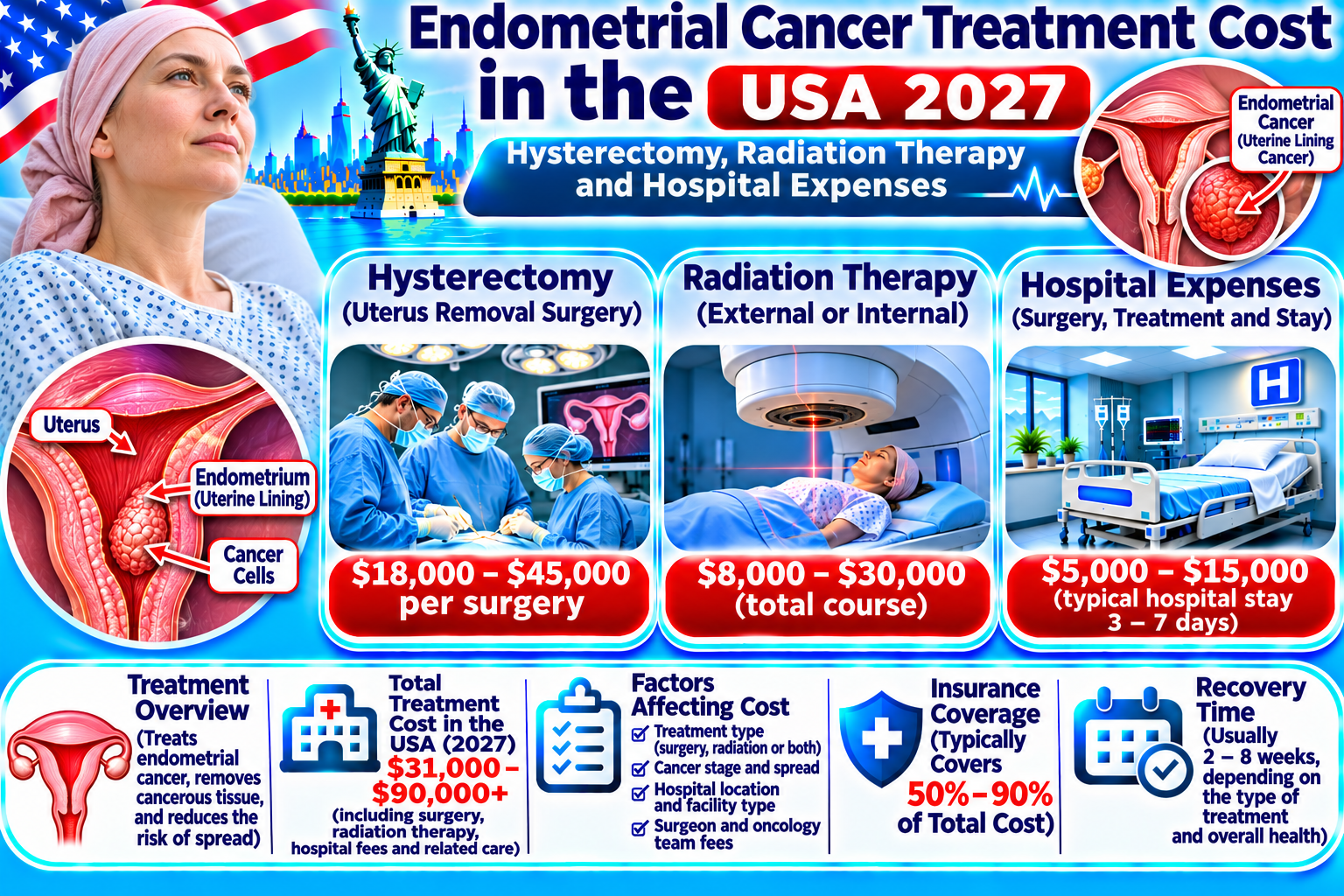
Endometrial cancer is a type of cancer that develops in the lining of the uterus, known as the endometrium. It is among the most common gynecological cancers diagnosed in the United States. Early detection and appropriate treatment can significantly improve outcomes, particularly when cancer remains confined to the uterus.
Understanding endometrial cancer treatment costs in the USA in 2027 is important for patients comparing hysterectomy surgery, radiation therapy, chemotherapy, oncologist fees, and hospital expenses. Treatment prices depend on cancer stage, surgical technique, hospital location, insurance benefits, and individual medical requirements.
Many patients with early-stage endometrial cancer undergo surgery as their primary treatment. Others require radiation, chemotherapy, immunotherapy, or a combination of approaches.
This guide explains estimated American endometrial cancer treatment expenses for 2027, including diagnostic testing, robotic hysterectomy, radiation sessions, hospital charges, Medicare coverage, and financial assistance.
What Is Endometrial Cancer?
Endometrial cancer develops when abnormal cells grow uncontrollably within the uterine lining. The most common type is endometrioid carcinoma, although several other histological types can occur.
Some cancers grow relatively slowly, while aggressive subtypes may spread more rapidly and require intensive treatment.
Doctors classify endometrial cancer according to its stage, grade, histological type, and molecular characteristics. These factors help determine the most appropriate treatment plan.
Common Symptoms of Endometrial Cancer
Abnormal vaginal bleeding is the most common warning sign of endometrial cancer, especially after menopause.
Other possible symptoms include:
- Vaginal bleeding after menopause.
- Unusually heavy or irregular menstrual bleeding.
- Bleeding between menstrual periods.
- Persistent abnormal vaginal discharge.
- Pelvic pain or pressure.
- Unexplained changes in pelvic symptoms.
These symptoms can have causes other than cancer. However, postmenopausal bleeding should always receive prompt medical evaluation.
Risk Factors for Endometrial Cancer
Several factors can increase the likelihood of developing endometrial cancer.
- Older age.
- Obesity and prolonged estrogen exposure.
- Diabetes and certain metabolic conditions.
- Polycystic ovary syndrome in some patients.
- Use of estrogen without adequate progesterone protection.
- Inherited Lynch syndrome.
- Family history of certain cancers.
- Previous use of tamoxifen.
Having one or more risk factors does not mean a person will develop cancer. Individual risk assessment should be discussed with a healthcare professional.
How Is Endometrial Cancer Diagnosed?
Diagnosis usually begins with a medical history, pelvic examination, and evaluation of abnormal bleeding.
Common diagnostic procedures include:
- Transvaginal ultrasound to evaluate the uterine lining.
- Endometrial biopsy to examine tissue samples.
- Hysteroscopy in selected circumstances.
- Dilation and curettage when additional sampling is necessary.
- CT or MRI when clinically indicated.
- Pathology and molecular testing to guide treatment.
A tissue diagnosis is generally necessary to confirm endometrial cancer. Imaging alone cannot reliably establish the diagnosis.
Endometrial Cancer Treatment Options
Hysterectomy Surgery
Hysterectomy is the primary treatment for many patients with endometrial cancer. It involves removing the uterus, usually including the cervix.
Surgery commonly includes removal of both fallopian tubes and ovaries, although ovarian preservation may be considered in carefully selected younger patients.
Lymph node assessment, often using sentinel lymph node mapping, may also be recommended to determine whether cancer has spread.
Robotic-Assisted Hysterectomy
Robotic-assisted hysterectomy uses specialized surgical instruments inserted through small abdominal incisions.
For suitable patients, minimally invasive surgery can reduce incision-related discomfort and shorten recovery compared with traditional open abdominal surgery.
However, robotic equipment and specialized operating room resources may affect hospital charges.
Open Abdominal Hysterectomy
Open hysterectomy involves a larger abdominal incision. It may be necessary when cancer is extensive, anatomy is complex, or minimally invasive surgery is not appropriate.
Open procedures generally involve longer hospitalization and recovery than uncomplicated minimally invasive surgery.
Radiation Therapy
Radiation therapy uses high-energy radiation to destroy cancer cells or reduce the risk of recurrence.
External beam radiation therapy directs radiation toward the pelvis from outside the body. Vaginal brachytherapy delivers radiation close to the treatment area using specialized equipment.
Not every patient requires radiation after surgery. Recommendations depend on cancer stage, grade, pathology, and recurrence risk.
Chemotherapy and Immunotherapy
Chemotherapy may be recommended for advanced-stage disease, aggressive tumor types, or recurrent cancer.
Commonly used chemotherapy medicines include carboplatin and paclitaxel.
Selected patients may also receive immunotherapy, depending on disease characteristics, treatment setting, and current clinical recommendations.
Endometrial Cancer Treatment Cost in the USA in 2027
American treatment costs vary according to surgery type, cancer stage, radiation requirements, medication selection, and hospital resources.
Historical research has shown that adding radiation therapy increases overall treatment costs compared with surgery alone. However, older study costs should not be interpreted as current hospital prices.
The following 2027 figures are illustrative financial planning estimates rather than verified national averages or guaranteed provider quotations.
Estimated USA Cost Breakdown
| Treatment or Service | Estimated Cost (USD) |
|---|---|
| Gynecologic Oncology Consultation | $200–$600+ |
| Transvaginal Ultrasound | $200–$800+ |
| Endometrial Biopsy | $300–$1,500+ |
| CT or MRI Examination | $500–$3,500+ |
| Laparoscopic Hysterectomy for Cancer | $18,000–$45,000+ |
| Robotic-Assisted Hysterectomy | $20,000–$55,000+ |
| Open Abdominal Hysterectomy | $25,000–$65,000+ |
| Complex Cancer Surgery | $40,000–$100,000+ |
| Vaginal Brachytherapy Course | $8,000–$25,000+ |
| External Beam Radiation Course | $15,000–$45,000+ |
| Chemotherapy Course | $10,000–$50,000+ |
| Immunotherapy Treatment | $8,000–$25,000+ per administration |
Important: These broad hypothetical estimates are for preliminary budgeting. Surgery prices may already include hospital, surgeon, anesthesia, and pathology charges. Medication prices and insurance payments can differ substantially.
USA Endometrial Cancer Treatment Cost Comparison
Because this guide focuses on the United States, the following table compares American treatment scenarios rather than different countries.
| USA Treatment Scenario | Illustrative Total Budget |
|---|---|
| Early-Stage Cancer With Surgery Alone | $20,000–$55,000+ |
| Hysterectomy With Radiation | $35,000–$90,000+ |
| Surgery With Chemotherapy | $40,000–$110,000+ |
| Advanced Cancer With Multiple Treatments | $75,000–$250,000+ |
Actual treatment expenses depend on the duration of care, complications, insurance contracts, and the specific treatment plan.
Hysterectomy Surgery Cost and Hospital Fees
Hysterectomy expenses generally include operating room services, gynecologic surgeon fees, anesthesia, surgical supplies, pathology, and postoperative monitoring.
Additional charges may arise from lymph node assessment, complex reconstruction, or prolonged hospitalization.
Patients should confirm whether the hospital estimate includes all professional services and necessary laboratory testing.
Radiation Therapy Cost for Endometrial Cancer
Radiation expenses depend on the treatment method, number of sessions, planning requirements, and medical facility.
External beam radiation commonly involves multiple outpatient appointments. Vaginal brachytherapy may require fewer treatment sessions, although schedules vary.
Radiation is not automatically necessary after every hysterectomy. The oncology team considers recurrence risk and potential side effects.
Chemotherapy and Medication Expenses
Patients with aggressive or advanced endometrial cancer may need systemic chemotherapy.
Treatment expenses include medication, infusion services, laboratory monitoring, anti-nausea medicines, and specialist appointments.
Immunotherapy can substantially increase costs when prescribed. Treatment selection depends on cancer characteristics and clinical eligibility.
Endometrial Cancer Treatment With Health Insurance
Many comprehensive health insurance plans cover medically necessary endometrial cancer treatment, including surgery, radiation, chemotherapy, and qualifying medications.
However, deductibles, copayments, coinsurance, and network restrictions can affect personal expenses.
Important insurance considerations include:
- Annual deductible and out-of-pocket maximum.
- Hospital and oncology specialist network participation.
- Prior authorization for planned procedures.
- Coverage for robotic-assisted surgery.
- Radiation therapy benefits.
- Chemotherapy and immunotherapy coverage.
- Diagnostic imaging and pathology benefits.
- Follow-up appointments and prescription medications.
Patients should request personalized insurance estimates before planned treatment whenever possible.
Medicare Coverage for Endometrial Cancer
Original Medicare generally covers medically necessary cancer treatment when applicable requirements are satisfied.
Medicare Part A commonly applies to qualifying inpatient hospital admissions. Part B generally covers eligible outpatient physician services, radiation therapy, and certain administered cancer medications.
Some oral cancer medications may fall under Medicare Part D prescription drug benefits.
Medicare Advantage plans may have different authorization requirements, provider networks, and cost-sharing arrangements.
Medicaid and Financial Assistance
Medicaid may cover medically necessary endometrial cancer treatment for eligible individuals, depending on state-specific benefits.
Some nonprofit hospitals offer financial assistance programs based on income and eligibility.
Patients may also ask oncology social workers about transportation support, prescription assistance, and available financial counseling.
Endometrial Cancer Treatment Without Insurance
Uninsured patients may face significant expenses for surgery, imaging, hospital care, radiation, and cancer medications.
Before accepting a planned treatment estimate, patients should ask:
- Are surgeon and anesthesia fees included?
- Does the estimate cover pathology testing?
- Are lymph node procedures included?
- How many hospital days are covered?
- Will radiation sessions be billed separately?
- What additional medication expenses are expected?
Factors Influencing Endometrial Cancer Treatment Prices
1. Cancer Stage and Grade
Early-stage cancer may require surgery alone, while advanced disease can involve several treatment methods and longer medical care.
2. Surgical Technique
Laparoscopic, robotic-assisted, and open procedures require different equipment, operating time, and hospital resources.
3. Hospital and Facility Charges
Operating room services, inpatient accommodation, nursing care, and specialized equipment affect total expenses.
4. Insurance Coverage
Deductibles, coinsurance, negotiated payment rates, and network participation influence patient financial responsibility.
5. Radiation and Medication Requirements
Additional radiation sessions, chemotherapy cycles, or immunotherapy treatments can substantially increase costs.
6. Geographic Location
Healthcare prices vary across American cities and states because of regional operating expenses and insurance arrangements.
7. Complications and Follow-Up
Unexpected complications, additional imaging, and repeat procedures may increase long-term medical spending.
Recovery After Hysterectomy
Recovery depends on the surgical approach, age, overall health, and extent of cancer treatment.
Patients undergoing minimally invasive surgery may resume routine activities sooner than those recovering from open abdominal surgery.
Temporary fatigue, abdominal discomfort, and changes in physical activity are common during recovery.
Patients should follow their surgical team’s instructions regarding wound care, lifting restrictions, medications, and follow-up appointments.
Possible Treatment Complications
Hysterectomy carries potential risks, including bleeding, infection, blood clots, and injury to nearby organs.
Radiation therapy can cause fatigue, bowel irritation, bladder symptoms, or vaginal changes.
Chemotherapy may cause nausea, fatigue, low blood counts, and increased infection risk.
Patients should discuss expected side effects and warning signs with their oncology team.
Long-Term Follow-Up Expenses
After treatment, patients usually attend scheduled oncology appointments to monitor recovery and evaluate possible recurrence.
Follow-up care may include physical examinations, symptom assessment, and imaging when clinically indicated.
The frequency of appointments depends on cancer stage, treatment history, and individual risk factors.
How to Reduce Endometrial Cancer Treatment Costs
- Verify insurance coverage before planned procedures.
- Request complete written hospital estimates.
- Confirm specialist and facility network participation.
- Ask whether pathology and anesthesia are included.
- Review radiation and prescription medication benefits.
- Explore hospital financial assistance programs.
- Discuss appropriate treatment options with an oncologist.
Patients should prioritize medically appropriate care rather than choosing treatment solely according to price.
Frequently Asked Questions
How much does endometrial cancer treatment cost in the USA in 2027?
Illustrative costs may range from approximately $20,000 to $55,000 or more for early-stage surgery-based treatment. Advanced disease requiring multiple therapies can cost considerably more.
Does insurance cover hysterectomy for endometrial cancer?
Many comprehensive plans cover medically necessary hysterectomy, subject to policy requirements and applicable patient cost-sharing.
Is radiation necessary after hysterectomy?
Not always. Radiation is recommended according to cancer stage, pathology, and recurrence risk.
Does Medicare cover endometrial cancer treatment?
Medicare generally covers qualifying medically necessary cancer treatment under applicable inpatient, outpatient, and prescription drug benefits.
Is robotic hysterectomy more expensive?
Robotic equipment may increase operating room expenses, but shorter hospitalization can offset some costs in selected cases.
Can endometrial cancer return after treatment?
Yes. Recurrence is possible, making appropriate follow-up care important.
Conclusion
Endometrial cancer treatment costs in the USA in 2027 depend on hysterectomy surgery, radiation therapy, hospital expenses, chemotherapy, specialist fees, and insurance coverage.
Patients should obtain detailed financial estimates, verify insurance benefits, and consult experienced gynecologic oncology specialists to develop an appropriate treatment plan.
Medical Disclaimer: This article provides general educational and financial planning information only. It does not replace professional medical advice, diagnosis, or treatment. All 2027 prices are illustrative estimates and should be verified directly with healthcare providers, hospitals, and insurance companies.
