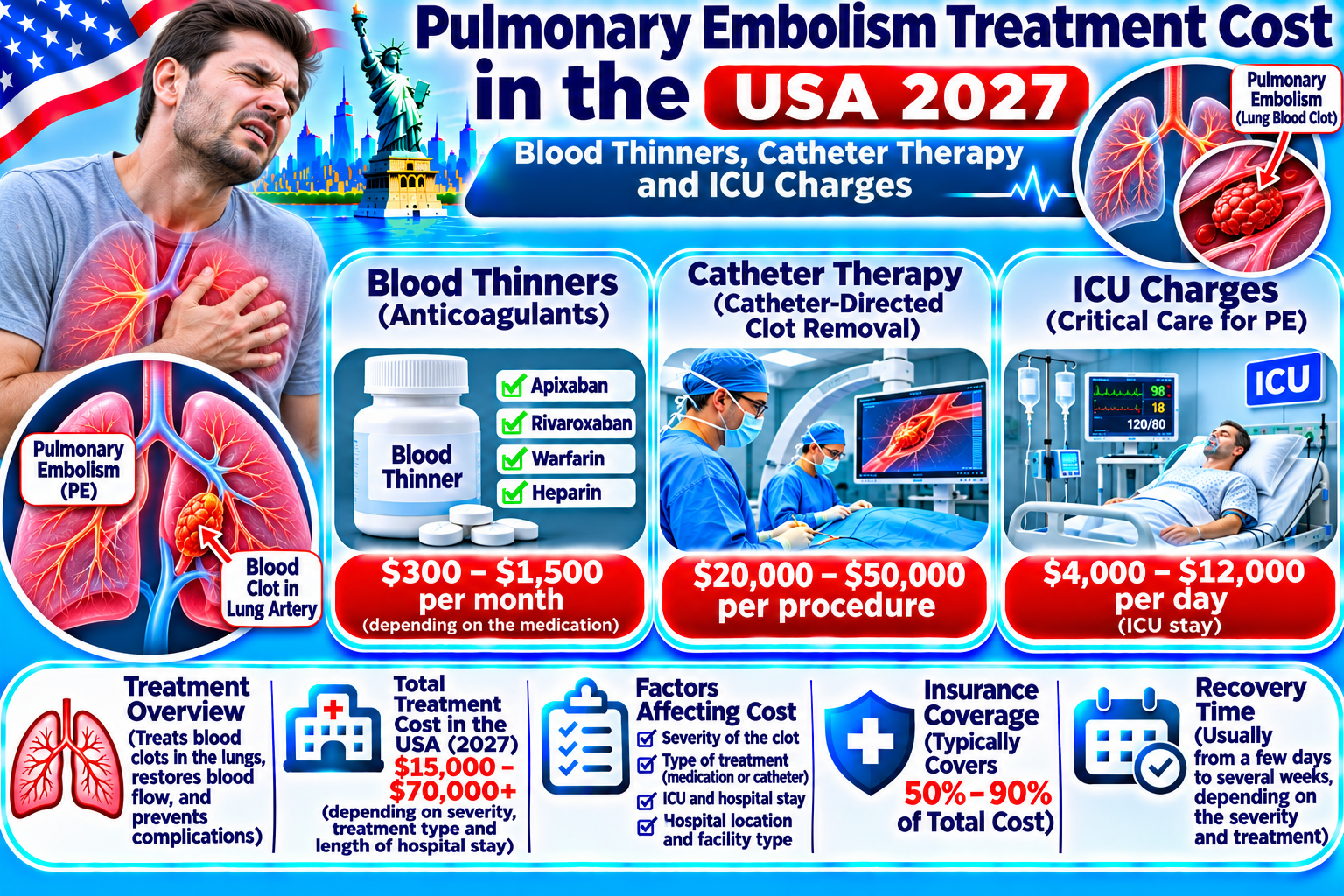
Pulmonary embolism (PE) is a potentially life-threatening medical condition that occurs when a blood clot blocks an artery in the lungs. Most pulmonary embolisms develop when a clot forms in a deep vein, usually in the leg, and travels through the bloodstream to the pulmonary arteries.
Understanding pulmonary embolism treatment costs in the USA in 2027 is important for patients comparing blood thinners, catheter-directed therapy, mechanical thrombectomy, emergency treatment, and intensive care unit (ICU) charges. Medical expenses vary depending on clot severity, treatment method, hospital location, insurance coverage, and complications.
Many patients with pulmonary embolism receive anticoagulant medications, while selected high-risk patients require advanced procedures or intensive monitoring. Some low-risk patients can be treated without prolonged hospitalization after appropriate medical evaluation.
This guide explains estimated pulmonary embolism treatment expenses in the United States for 2027, including diagnostic imaging, anticoagulant medications, catheter procedures, hospital fees, Medicare coverage, and long-term recovery costs.
What Is Pulmonary Embolism?
Pulmonary embolism develops when a clot obstructs blood flow through one or more pulmonary arteries. This blockage can reduce oxygen delivery and increase pressure on the right side of the heart.
The condition is part of venous thromboembolism, which also includes deep vein thrombosis (DVT).
Some pulmonary embolisms cause relatively mild symptoms, while others lead to serious heart strain, low blood pressure, or cardiovascular collapse.
Early diagnosis and appropriate treatment are essential for reducing the risk of death, recurrent blood clots, and long-term complications.
Common Symptoms of Pulmonary Embolism
Symptoms may develop suddenly and vary according to the size of the clot and the patient’s underlying health.
- Sudden or unexplained shortness of breath.
- Chest pain that may worsen during deep breathing.
- Rapid heartbeat.
- Coughing, sometimes with blood.
- Dizziness or fainting.
- Unusual sweating or weakness.
- Low oxygen levels.
- Leg swelling or pain associated with DVT.
Emergency warning: Sudden breathing difficulty, severe chest pain, fainting, or coughing blood requires immediate emergency medical attention. Patients should not delay care to compare treatment prices.
What Causes Pulmonary Embolism?
Pulmonary embolism usually occurs when a blood clot travels from a deep vein to the lungs. Several factors increase the risk of clot formation.
- Recent major surgery or hospitalization.
- Prolonged bed rest or immobility.
- Previous DVT or pulmonary embolism.
- Active cancer and certain cancer treatments.
- Pregnancy and the postpartum period.
- Estrogen-containing medications.
- Inherited or acquired clotting disorders.
- Significant injury or serious medical illness.
Some patients develop pulmonary embolism without an identifiable temporary trigger. The underlying cause helps doctors determine treatment duration.
Types and Severity of Pulmonary Embolism
Low-Risk Pulmonary Embolism
Patients with stable blood pressure, reassuring clinical findings, and low predicted complication risk may qualify for early discharge or outpatient anticoagulation.
Intermediate-Risk Pulmonary Embolism
Some patients remain hemodynamically stable but show signs of right ventricular strain or abnormal cardiac biomarkers. These patients may require hospitalization and closer monitoring.
High-Risk Pulmonary Embolism
High-risk pulmonary embolism may cause persistent low blood pressure, severe circulatory instability, or cardiac arrest.
Emergency reperfusion treatment, advanced circulatory support, and intensive care may be necessary.
How Is Pulmonary Embolism Diagnosed?
Doctors assess symptoms, medical history, vital signs, and the likelihood of pulmonary embolism before selecting diagnostic tests.
Common examinations include:
- CT pulmonary angiography to visualize blood clots.
- D-dimer blood testing in appropriately selected patients.
- Electrocardiogram to evaluate heart activity.
- Cardiac biomarkers when risk assessment requires them.
- Echocardiography to assess right heart function.
- Leg ultrasound to identify associated DVT.
- Ventilation-perfusion scanning when appropriate.
Not every patient requires every test. The diagnostic approach depends on clinical probability, kidney function, contrast suitability, and overall medical stability.
Pulmonary Embolism Treatment Options
Anticoagulant Medications
Anticoagulants, commonly called blood thinners, are the primary treatment for most patients with pulmonary embolism.
They help prevent clot enlargement and additional clot formation while the body gradually breaks down existing clots.
Common medications include apixaban, rivaroxaban, warfarin, and injectable heparin products.
Systemic Thrombolysis
Systemic thrombolysis uses clot-dissolving medication delivered into the bloodstream. It may be considered for selected patients with life-threatening pulmonary embolism.
Because thrombolytic medications can cause major bleeding, including bleeding inside the brain, careful patient selection is essential.
Catheter-Directed Thrombolysis
Catheter-directed therapy delivers clot-dissolving medication through a catheter positioned near or within the pulmonary artery clot.
This procedure may be considered for selected patients with severe pulmonary embolism when the expected benefits outweigh the risks.
Mechanical Thrombectomy
Mechanical thrombectomy uses specialized catheter devices to remove or reduce clot material from the pulmonary arteries.
It is generally reserved for selected patients rather than routinely used for uncomplicated pulmonary embolism.
Surgical Embolectomy
Surgical pulmonary embolectomy removes blood clots through an operation. It may be considered in selected severe cases when other treatment options are unsuitable or unsuccessful.
Pulmonary Embolism Treatment Cost in the USA in 2027
American pulmonary embolism treatment expenses depend on disease severity, hospital admission, anticoagulant selection, procedural technology, and intensive care requirements.
Historical research has demonstrated substantial differences in hospital spending between anticoagulation alone, catheter-directed thrombolysis, and mechanical thrombectomy.
The following 2027 figures are illustrative budgeting estimates, not verified national averages or guaranteed medical quotations.
Estimated USA Cost Breakdown
| Treatment or Service | Estimated Cost (USD) |
|---|---|
| Emergency Department Evaluation | $1,000–$5,000+ |
| CT Pulmonary Angiography | $800–$3,500+ |
| D-Dimer and Laboratory Testing | $100–$600+ |
| Warfarin Medication | $5–$40+ per month |
| Direct Oral Anticoagulant | $30–$650+ per month |
| Uncomplicated Inpatient PE Treatment | $10,000–$35,000+ |
| Catheter-Directed Thrombolysis Episode | $25,000–$70,000+ |
| Mechanical Thrombectomy Episode | $35,000–$100,000+ |
| ICU Hospital Charges | $5,000–$15,000+ per day |
| Complex PE With Intensive Care | $50,000–$200,000+ |
Important: These hypothetical figures are broad pre-insurance budgeting ranges. Hospital episodes may already include ICU, imaging, medication, and procedure charges. Separate amounts must not be added without checking for overlap.
USA Pulmonary Embolism Treatment Cost Comparison
Because this article focuses on the United States, the table below compares treatment scenarios within the American healthcare system rather than different countries.
| USA Treatment Scenario | Illustrative Total Budget |
|---|---|
| Low-Risk Outpatient PE Treatment | $1,500–$7,000+ |
| Hospitalization With Anticoagulation | $10,000–$35,000+ |
| Catheter-Based PE Treatment | $25,000–$100,000+ |
| Severe PE With ICU Care | $50,000–$200,000+ |
These scenarios are not interchangeable. Treatment selection depends on clinical severity, bleeding risk, heart function, and the patient’s overall condition.
Blood Thinner Medication Costs
Anticoagulant medications are the foundation of treatment for most pulmonary embolism patients. The total expense depends on the medication, treatment duration, pharmacy prices, and insurance benefits.
Warfarin is generally inexpensive but requires regular INR blood testing. Apixaban and rivaroxaban usually do not require routine INR monitoring, although they may involve higher pharmacy costs.
Medication selection depends on kidney function, pregnancy status, bleeding risk, drug interactions, and other medical considerations. Patients should never stop or switch anticoagulants without medical guidance.
Catheter Therapy and Thrombectomy Expenses
Catheter-based pulmonary embolism treatment requires specialized equipment, imaging, experienced physicians, and hospital monitoring.
Expenses may include:
- Interventional physician fees.
- Catheterization laboratory services.
- Thrombectomy devices or infusion catheters.
- Clot-dissolving medications when used.
- Anesthesia or sedation.
- Postprocedure monitoring.
- Additional imaging and laboratory testing.
Published American research indicates that device costs, ICU use, and hospital length of stay are major drivers of catheter treatment expenses.
Mechanical thrombectomy is not automatically cheaper or more effective than catheter-directed thrombolysis. The appropriate approach depends on clinical circumstances.
ICU Charges for Pulmonary Embolism
Patients with severe pulmonary embolism may require intensive care because of low blood pressure, heart strain, breathing difficulties, or complications.
ICU expenses can include continuous monitoring, specialized nursing, intravenous medications, oxygen support, and advanced cardiovascular treatment.
Not every patient receiving catheter therapy requires ICU admission. The appropriate monitoring setting depends on treatment type, bleeding risk, and clinical stability.
Longer hospitalization and unexpected complications can substantially increase the final hospital bill.
Pulmonary Embolism Treatment With Health Insurance
Many comprehensive American health insurance plans cover medically necessary pulmonary embolism treatment, including diagnostic testing, anticoagulants, hospitalization, and qualifying procedures.
However, coverage does not necessarily eliminate patient expenses.
Important insurance considerations include:
- Annual deductible and out-of-pocket maximum.
- Emergency department coverage.
- Hospital and specialist network participation.
- Prescription anticoagulant benefits.
- Coverage for catheter procedures.
- ICU and inpatient hospital benefits.
- Follow-up imaging and specialist appointments.
Patients should review their insurance benefits when practical, but emergency treatment must never be delayed for financial authorization.
Medicare Coverage for Pulmonary Embolism
Original Medicare generally covers medically necessary pulmonary embolism care when applicable requirements are met.
Medicare Part A commonly applies to qualifying inpatient hospital admissions. Part B generally covers eligible outpatient examinations, physician services, and certain procedures.
Prescription blood thinners obtained from pharmacies may be covered under applicable Medicare Part D benefits.
Medicare Advantage plans can have different provider networks, authorization rules, and cost-sharing arrangements.
Medicaid and Financial Assistance
Medicaid may cover medically necessary pulmonary embolism treatment for eligible individuals, subject to state-specific requirements.
Some nonprofit hospitals offer financial assistance programs. Patients can ask hospital financial counselors about payment arrangements and prescription assistance.
Pulmonary Embolism Treatment Without Insurance
Uninsured patients may face substantial expenses for emergency evaluation, diagnostic imaging, medications, and hospital care.
After receiving necessary emergency treatment, patients can request an itemized bill and ask about financial assistance or payment plans.
For ongoing care, patients should discuss appropriate lower-cost medication options with their clinician.
Factors Influencing Pulmonary Embolism Treatment Prices
1. Severity of the Blood Clot
Low-risk pulmonary embolism may require fewer hospital resources than severe disease involving heart strain or circulatory instability.
2. Treatment Method
Anticoagulation, catheter-directed therapy, thrombectomy, and surgical embolectomy involve different equipment, staffing, and procedural expenses.
3. Hospital and ICU Charges
Hospital location, intensive monitoring, specialized nursing, and length of stay can significantly influence total costs.
4. Insurance Coverage
Deductibles, coinsurance, negotiated rates, and prescription benefits affect patient financial responsibility.
5. Medication Selection
Generic warfarin, direct oral anticoagulants, and injectable medications have different prices and monitoring requirements.
6. Complications and Additional Care
Major bleeding, recurrent clots, respiratory failure, or cardiovascular complications may require additional treatment and increase expenses.
Recovery After Pulmonary Embolism
Recovery varies according to clot severity, heart and lung function, and underlying medical conditions.
Some patients recover over several weeks, while others experience persistent fatigue or shortness of breath.
Anticoagulation commonly continues for an initial treatment period of three to six months. Some patients require extended therapy depending on recurrence risk and bleeding considerations.
Patients should attend follow-up appointments and report persistent or worsening symptoms.
Possible Long-Term Complications
Potential complications include recurrent pulmonary embolism, bleeding related to anticoagulants, and persistent exercise limitations.
A small proportion of patients develop chronic thromboembolic pulmonary hypertension, a condition involving persistent obstruction and elevated pressure in pulmonary arteries.
Further testing may be necessary when breathlessness or exercise intolerance continues after treatment.
How to Reduce Pulmonary Embolism Treatment Costs
- Review insurance and prescription benefits.
- Ask about medically appropriate generic medications.
- Request itemized hospital bills.
- Confirm follow-up specialist network participation.
- Explore hospital financial assistance programs.
- Discuss medication monitoring requirements.
- Follow prescribed treatment to reduce recurrence risk.
Financial planning is important, but the safest medically appropriate treatment should remain the priority.
Frequently Asked Questions
How much does pulmonary embolism treatment cost in the USA in 2027?
Illustrative costs may range from a few thousand dollars for low-risk outpatient care to more than $100,000 for severe cases requiring advanced procedures and intensive care.
Does every pulmonary embolism patient need hospitalization?
No. Carefully selected low-risk patients may receive outpatient treatment after appropriate medical assessment.
Does insurance cover pulmonary embolism treatment?
Many comprehensive plans cover medically necessary treatment, subject to policy requirements and patient cost-sharing.
How much does catheter therapy cost?
Illustrative catheter-based treatment episodes may cost approximately $25,000 to $100,000 or more before insurance adjustments, depending on the procedure and hospital resources.
Does Medicare cover blood thinners?
Many prescription anticoagulants may be covered under applicable Medicare Part D plans, subject to formulary and coverage rules.
Can pulmonary embolism return?
Yes. Recurrent blood clots are possible, particularly when persistent risk factors remain. Follow-up care and prescribed anticoagulation help manage this risk.
Conclusion
Pulmonary embolism treatment costs in the USA in 2027 depend on blood thinner medications, catheter therapy, mechanical thrombectomy, ICU charges, hospital expenses, and insurance coverage.
Most patients receive anticoagulants, while selected severe cases require advanced interventions. Understanding treatment options, insurance benefits, and long-term medication expenses can help patients prepare financially.
Medical Disclaimer: This article provides general educational and financial planning information only. It does not replace professional medical advice, diagnosis, or treatment. All 2027 prices are illustrative estimates and should be verified directly with healthcare providers, hospitals, pharmacies, and insurance companies.
